Back
Rebuilding alignment on the Eastern Tunnelling Package
Employee Experience
.jpg)
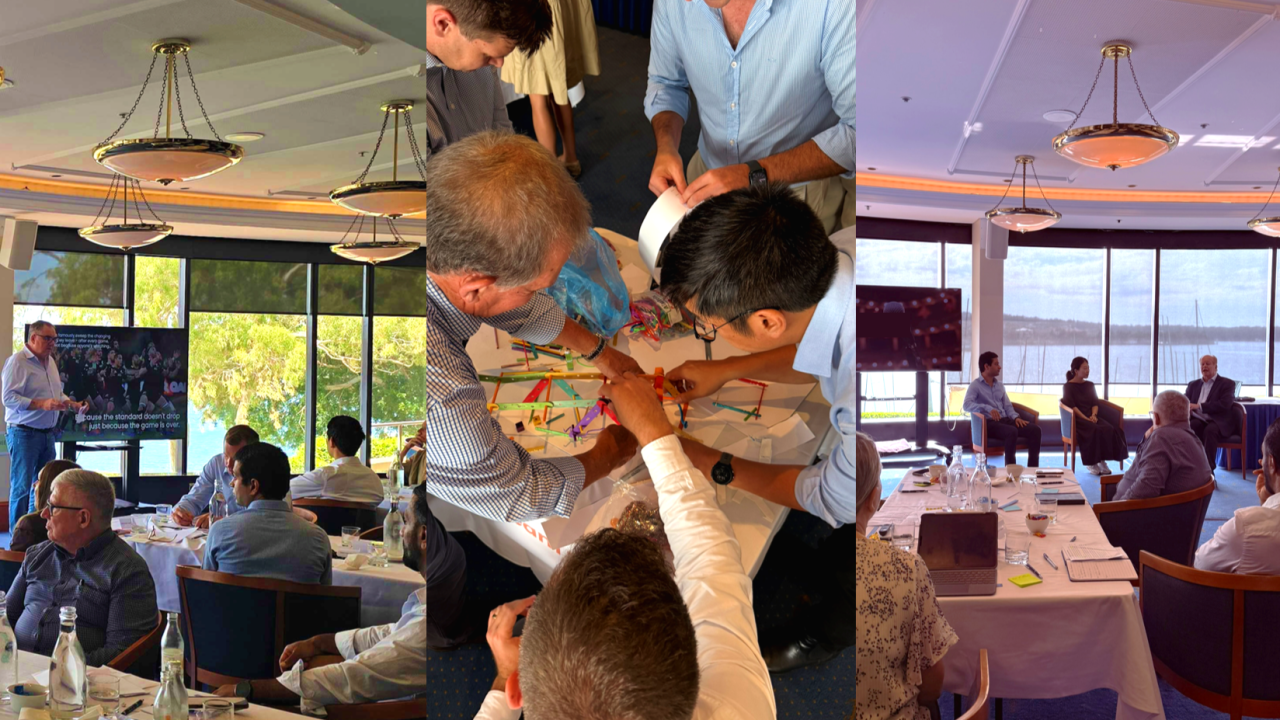

In February 2026, we brought together the leadership team of a joint venture that had been delivering one of Sydney's most complex infrastructure projects for four years. The Eastern Tunnelling Package on Sydney Metro West. Two organisations, multiple disciplines, hundreds of people, and a partnership that had been under real pressure - not the kind that gets fixed with a team lunch and a nice set of values on a wall, but the kind that had been building over months and needed a deliberate, structured response.
That response was Project Touchdown, a process we designed and ran across several months to rebuild alignment from the ground up. It started with interviews across both Sydney Metro and JCG, moved into targeted counterpart alignment sessions where we facilitated structured conversations between individuals navigating real differences in ways of working, and culminated in the ETP Alignment Workshop - a full day designed to take a team that had been doing serious individual repair work and bring them back together around a shared foundation and a shared future.
Why the Workshop Was Designed the Way It Was
By the time we reached the workshop, the teams had come a long way. The counterpart sessions had been substantive. Some had been difficult, all were honest, and many had landed in a genuinely better place. What the team needed at this point was not more structured problem-solving or another serious conversation. They needed the opportunity to reset as a collective, to reconnect as partners and collaborate as such, and to look forward to the year ahead rather than back at everything that had brought them to this point.
So we made a deliberate choice to move away from a conventional workshop format. The structure we designed was more hands-on, more creative, and genuinely fun, but was designed that way with purpose. The creative exercises we built were not a break from the real work; they were a different vehicle for it. Teams were still mapping challenges, still building guiding principles, still doing the serious business of setting a partnership up for its final year. We just made sure the format gave them room to do that work in a way that also allowed them to reconnect and find some shared energy - something that can be hard to hold onto in the middle of a project of this scale and complexity.
The day was structured around four pillars: Foundations, Trust, Cultivation, and Legacy.
Foundations
We opened the day by asking the team to look at their values not as a statement on a page but as a practical tool for the year ahead. The question was not "do you believe in these values" but "where are these values going to matter most in the next twelve months, and how will you actually apply them when things get difficult?" Teams worked through real scenarios - upcoming handovers, interface challenges, moments where the pressure would be highest - and mapped out what ownership and respect and the other values on that list would actually look like in practice.
Trust
This section was where the design moved furthest from the conventional. We ran a hands-on team activity where groups were each given different materials and tasked with building a mode of transportation in half an hour. The materials were deliberately unequal. The only way to build something worth building was to share, negotiate, and think about what was best for the whole rather than just your own group. The teams did exactly that, and watching it happen was one of those moments where you see the point of the exercise landing in real time.
We also heard from two teams who had been through some of the most difficult periods of the Project Touchdown process and had genuinely come out the other side. Their willingness to share what that journey had looked and felt like - in front of the whole room - set a tone for the day that no amount of facilitated discussion could have created.
Cultivation
The afternoon shifted toward the practical work ahead. Teams mapped the real challenges coming in the final stretch: handovers, interface work with other contractors, commercial complexity, and worked through the risks and actions to address them together as a whole team. We also developed four guiding principles for how the partnership would operate in the final year: Understand, Speak Up, Follow Through, Find the Solution. These were not handed to the room; they came out of the conversation that day, and the team owns them.
Legacy
We closed the day by asking a question that construction projects rarely make time for: what do we want the story of ETP to be? One of the project directors spoke about legacy in the truest sense of the word - what it means to build something that outlasts you, using the All Blacks and NASA as reference points for teams whose impact is still felt long after the project ends.
Then each team was given a film genre and asked to develop a movie based on the story of ETP - the current state, the challenges to overcome, and the ending they were going to write. The question framing the activity was: how do you make this box office worthy? Each team pitched their concept to the project directors, who had taken on the role of movie directors for the occasion. There was a lot of laughter, genuine creativity, and underneath it, something that proved harder to manufacture in any other way - a shared sense of what this project could be, and a shared motivation to get there.
What Came After
The workshop was not the finish line; it was a turning point in the middle of the work. Since February, we have maintained regular check-ins with the team, and the commitments made that day are being held to account against the real pressures of a major project close. The relationships are being tested. They are holding.
If you are leading a complex joint venture or major project where the relationship between teams has become a source of friction, the question worth sitting with is not whether a workshop would help - it is whether you are willing to do the work before and after it that determines whether anything actually changes. That groundwork is most of what we do, and it is what we would love to help you think through.

We exist to transform human experiences.


130/20 Spring Street
Bondi Junction
NSW 2022
©2026 The Strategy Group. All rights reserved.