Back
Delivering Customer-Centric Impact in Vancouver
News
.jpg)
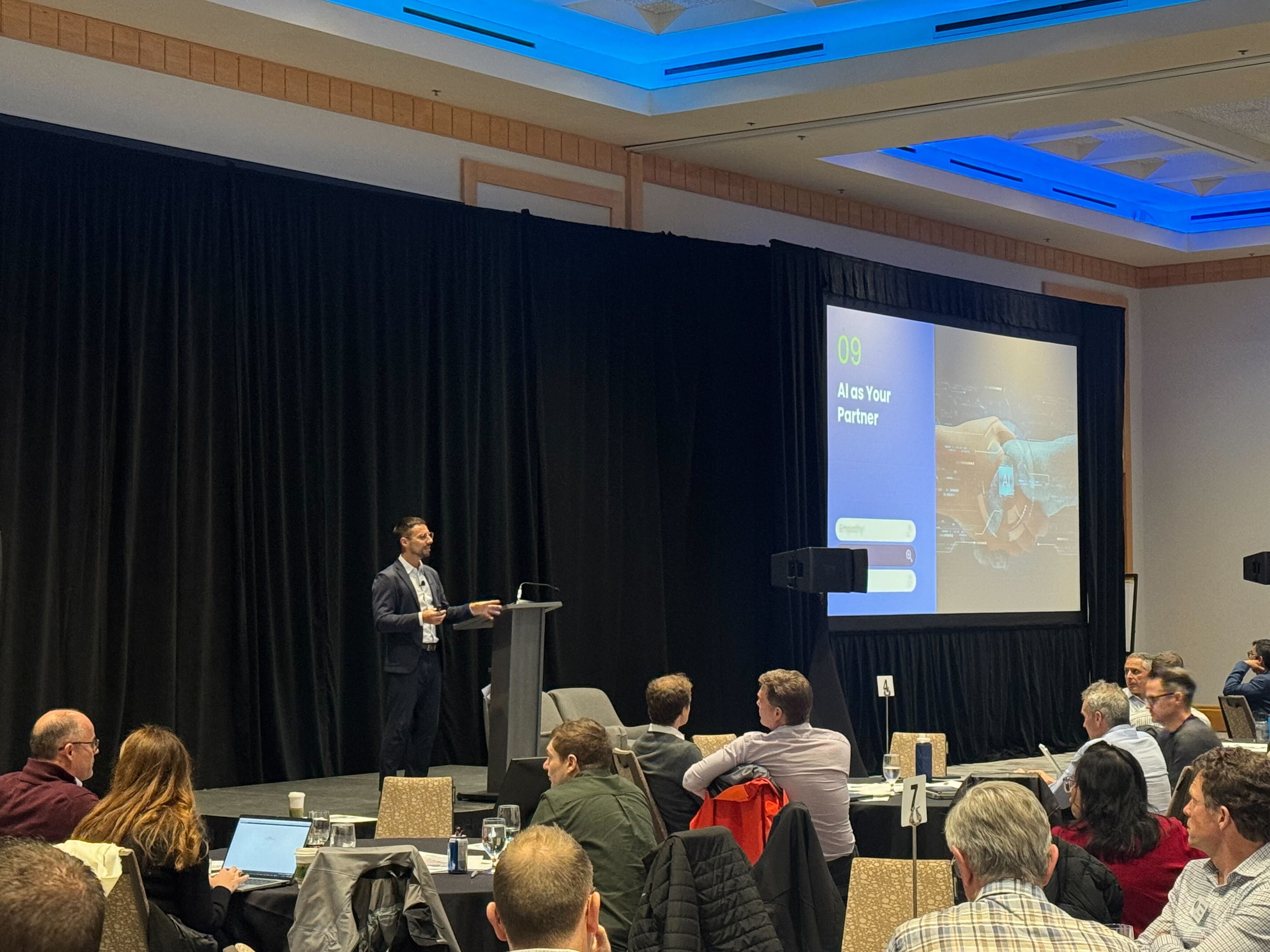

Last week, Marcus and I delivered a full-day workshop for KCB in Vancouver, Canada, in front of around 100 employee shareholders who are also the company’s key leaders. KCB is a large engineering consultancy, and the purpose of the session was to shift mindsets towards stronger customer centricity across every client interaction — from tenders and presentations to project updates and long-term engagements.
We began by sharing insights from our experience working with major construction and engineering firms. While these organisations are typically excellent at explaining technical solutions, they often struggle to clearly articulate the value those solutions create for clients. In particular, they rarely address client needs and expectations in away that builds trust and confidence — the kind of trust that reassures clients they are not only choosing the right technical solution, but also the right team to work with over the next two, three, or even five years on complex, long-term infrastructure projects.
The workshop was highly interactive and designed to be practical and engaging. It included team-based activities, reflections, and panel discussions, all structured around three core principles of customer centricity tailored specifically to construction and engineering firms: Empathy, Clarity, and Impact.
The first principle was Empathy. We focused on helping participants truly understand their clients’ perspectives — not just their stated requirements, but the deeper needs, pressures, and expectations behind them. We introduced the concept of active listening, encouraging participants to go beyond hearing words and instead understand intent, context, and meaning, so clients feel genuinely heard and understood.
We also introduced our Client Profile Framework. This framework helps teams reflect on what they want clients to see, feel, and experience when engaging with them. It explores key client needs and expectations, pain points at personal, professional, and project levels, and identifies moments of delight — opportunities to go above and beyond to build confidence, trust, and long-term relationships. Ultimately, we positioned empathy as a direct driver of winning more work.
The second principle was Clarity. Once client needs are understood, the challenge becomes communicating value clearly and simply, without relying on overly technical language. We explored slide and visual design, focusing on clarity of messaging and the importance of using only the information needed to convey the right message.
Participants worked through how to be clear about their intent in any client interaction: what they want the client to know, feel, decide, or do as a result. We also discussed storytelling in presentations and demonstrated how AI can be used as a practical partner — from helping structure presentations to role-playing as a client to surface priorities, concerns, and perspectives relevant to specific projects.
The third principle was Impact. This focused on how confidence, physical presence, posture, and voice influence how messages are received. Even with a strong understanding of client needs and a clear solution, impact can be lost if delivery lacks confidence or presence. We explored how body language and vocal delivery reinforce credibility and help convince clients that they are working with the right team.
To bring all three principles together, we ran role-play exercises where participants alternated between playing the client and the joint venture team. This gave everyone hands-on experience applying empathy, clarity, and impact in realistic client scenarios.
The workshop was extremely well received. Participants were highly engaged and requested access to the presentation and supporting materials. To close the session, we asked each participant to make a personal commitment for their next client interaction or project engagement. Specifically, they identified one action they would take to improve empathy, one to increase clarity, and one to strengthen impact. These commitments were captured and saved, with the intention of revisiting them in future follow-ups to understand how the principles are being applied in practice.

We exist to transform human experiences.


130/20 Spring Street
Bondi Junction
NSW 2022
©2026 The Strategy Group. All rights reserved.